
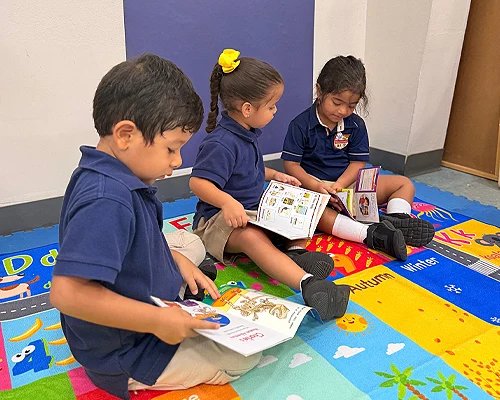
Why Does Reading Improve Learning?
Few habits have as broad an impact on a child’s development as reading. It’s no coincidence that, time and again, education research shows that reading improves learning in almost every academic area, not just language. Understanding why can help families make reading a daily priority, not just one more school task. It Expands Vocabulary and Language Comprehension Every book a child reads exposes them to words, sentence structures and ways of expressing ideas that rarely come up in everyday conversation. That richer vocabulary doesn’t stay in language class. It helps children understand instructions in math, interpret problems in science and follow complex explanations in any subject. It Builds Critical Thinking A good reader doesn’t just decode words. They infer, predict, question and connect what they read with what they already know. These critical thinking skills, practiced page after page, are exactly what a student needs to analyze a historical text, interpret a science graph or argue a position in an essay. It Strengthens Focus and Memory Reading asks the brain to hold attention for minutes at a time, connect ideas across paragraphs and remember details from earlier pages to make sense of the story. This steady practice strengthens working memory,
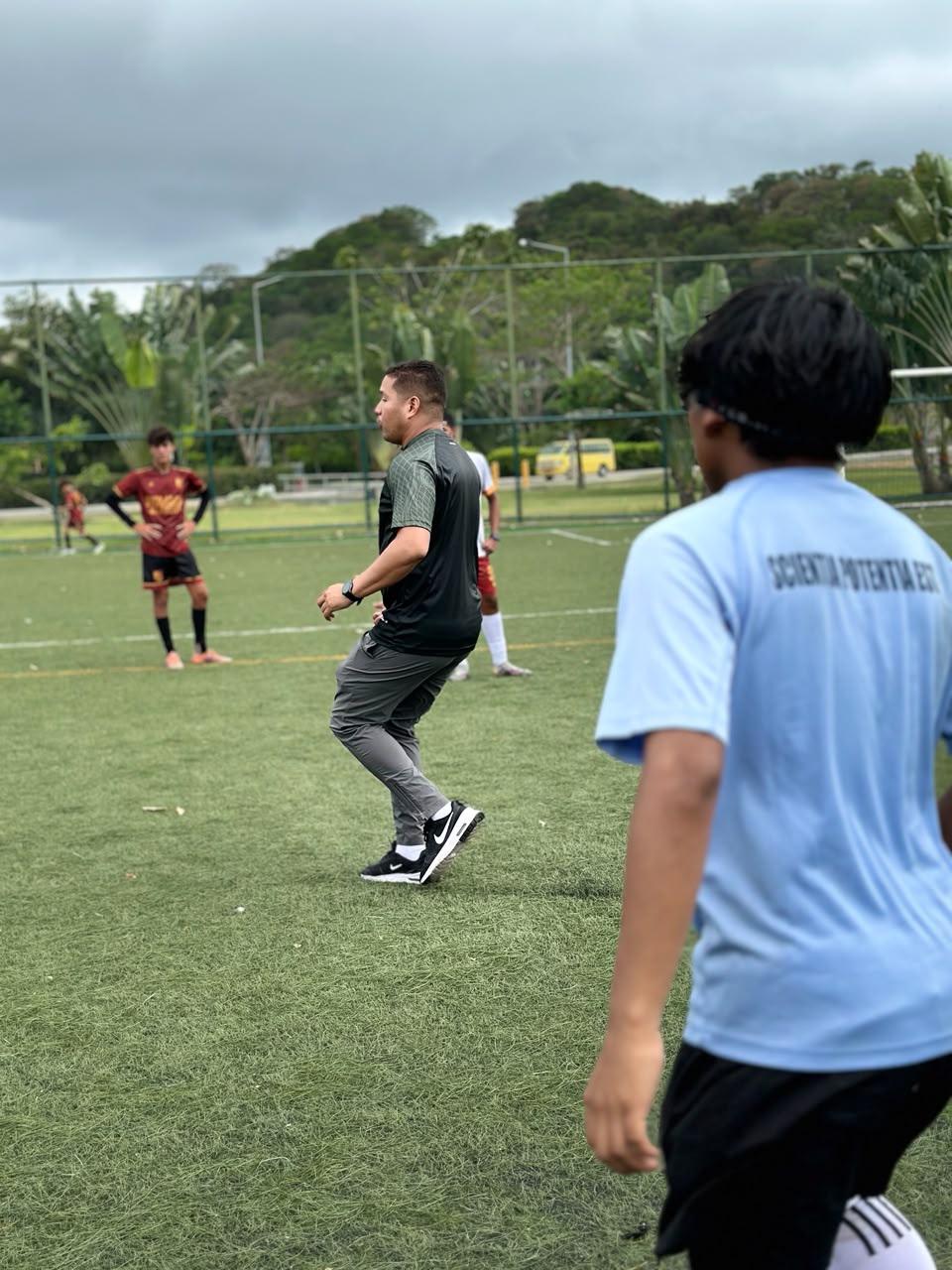
Howard Academy Profiles | Luis Rojo
Besides leading the Howard Academy team, you’re part of the coaching staff of Panama’s youth national teams. How do you bring that experience into our students’ development? Being part of the national teams’ coaching staffs has given me experiences that I then share with the young players. We try to pass on values and give them proper training, with practices and content adapted to each stage of their development. I also share what I’ve lived in and outside the country, especially in competitions with Panama’s youth national teams. 1. Last year, Howard Academy won the championship. What did that win mean for the players, the coaching staff and the school community? Winning last year’s championship and recently finishing as runners-up helped the players believe more in themselves. These experiences built their confidence and gave extra motivation to them and to their parents. We’ve always had the school’s backing, and it was a very positive experience, with the whole Howard Academy community united behind the team. 2. What do you see as the athletic and human keys that led the team to win that championship? One of the most important things was team unity, the boys’ commitment and the parents’ constant

Howard Academy Profiles | Lourdes Escobar
An Interview with Coach Lourdes Escobar Our school community has trained teachers committed to inclusive education, able to recognize each student’s needs, abilities and potential. Their training, calling and sensitivity let them create learning spaces where everyone feels respected, valued and supported. In this interview, we get to know the inspiring experience of Lourdes Escobar, a teacher and coach who, for more than 24 years, has used gymnastics as a tool for inclusion, personal growth and whole development for children, teens and adults with special educational needs. 1. What does being a teacher mean to you? Being a teacher is a calling and a commitment to every student. It’s the chance to teach with love, share knowledge and experiences, and bring in the rules and values that help people live together with respect. It also means showing that everyone can learn, take part and belong when they get the support, understanding and opportunities they need. 2. How did your connection with inclusive gymnastics begin? I practiced artistic and rhythmic gymnastics from a very young age. I competed in inter-school and provincial events and eventually became part of Panama’s National Team. That background let me accept an invitation from a nonprofit

The Magic of Reading in English: A Family Journey of Imagination, Culture and Learning
By Diana Lavayen, HA parent | Literacy and teacher training specialist | Executive Director of Fundación ProEd As an education professional specializing in literacy, reading promotion and teacher training, I’ve seen over the years that books have an extraordinary power: they can change the way children learn, think, feel and connect with the world. Through my work leading education initiatives at Fundación ProEd and supporting teachers in innovation and teaching improvement, I’ve seen how reading opens doors to new knowledge, cultures and points of view. But it’s in my most important role, as a mother, that I’ve seen up close the real magic that happens when a child discovers the joy of reading. Since my daughter was little, we’ve kept a family tradition that became one of our favorite moments of the day: reading together before bed. Before she could read, I was the one who brought the stories to life with my voice. Over time, once she started reading, our routine grew into a beautiful exchange. We take turns reading chapters, meeting characters, imagining settings and talking about the stories we find in books. This experience confirmed something I’ve always defended in my work: reading isn’t just an academic

Rest and Reading Don’t Interrupt Learning. They’re Part of It.
01 | THE INVISIBLE GIFT OF VACATION What happens in your child’s brain while they sleep, and while they read, matters as much for their development as any hour of class. Neuroscience confirms it. It’s time to act. This week, while Howard Academy Group students enjoy their vacation, something quiet but extraordinary is happening in their brains. It doesn’t appear on any school calendar. It isn’t measured on any test. But neuroscience has documented it for decades, with a clarity that leaves no room for debate: “They’re consolidating what they learned. And if they’re also reading for fun, they’re building the mental architecture that will hold up all their future learning.” Sleep isn’t a pause in learning. Reading isn’t a minor hobby. They are the two great drivers of cognitive development we most underestimate as a society, and the ones with the biggest impact on our children’s academic and life paths. What the Brain Does While Your Child Sleeps 02 | THE NEUROSCIENCE OF REST During deep sleep, the brain doesn’t rest. It works with an efficiency no artificial tool can match: it reviews what was learned during the day, discards redundant information and consolidates what matters, moving it from

How to Support Your Child During Exam Season
Quarterly exams are here, and with them comes something every family knows well: tension. The child who doesn’t want to study. The teenager who says they don’t care but isn’t sleeping well. The parent who doesn’t know whether to push or step back. What happens at home this week matters as much as what happens in the classroom. Not because parents need to become tutors, but because the emotional climate around a student before an exam directly shapes how they walk in to take it. Here are evidence-based strategies, along with the approach we use at Howard Academy Group to make this a time of growth, not burnout. Routine Is Your Strongest Ally The brain learns best when it knows what to expect. A set study time, in the same place, with the phone off, tells your child’s nervous system: this matters, and I’m here to support you. They don’t need endless hours. Blocks of 45 minutes with short breaks lead to better retention than three hours of chaotic studying. What matters is consistency, not quantity. Research shows: “Sleep quality and consistency in the month before an exam explained nearly 25% of the variation in academic performance.” npj Science of