
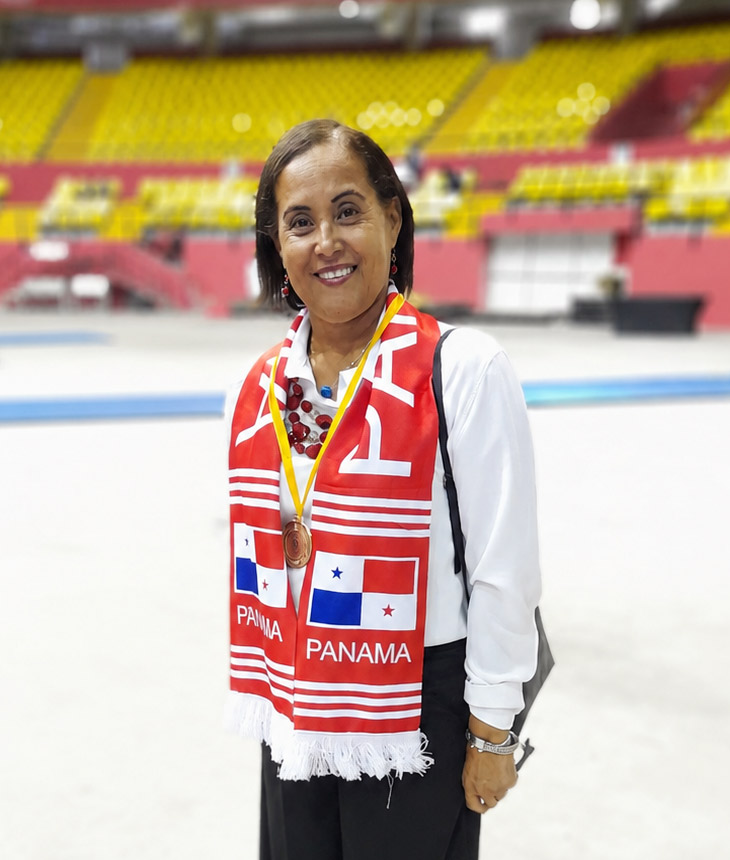
An Interview with Coach Lourdes Escobar
Our school community has trained teachers committed to inclusive education, able to recognize each student’s needs, abilities and potential. Their training, calling and sensitivity let them create learning spaces where everyone feels respected, valued and supported.
In this interview, we get to know the inspiring experience of Lourdes Escobar, a teacher and coach who, for more than 24 years, has used gymnastics as a tool for inclusion, personal growth and whole development for children, teens and adults with special educational needs.
1. What does being a teacher mean to you?
Being a teacher is a calling and a commitment to every student. It’s the chance to teach with love, share knowledge and experiences, and bring in the rules and values that help people live together with respect.
It also means showing that everyone can learn, take part and belong when they get the support, understanding and opportunities they need.
2. How did your connection with inclusive gymnastics begin?
I practiced artistic and rhythmic gymnastics from a very young age. I competed in inter-school and provincial events and eventually became part of Panama’s National Team.
That background let me accept an invitation from a nonprofit organization to become a women’s rhythmic gymnastics coach. The main goal of the program was to promote sports inclusion for children, teens and adults with special educational needs, including people with Down syndrome, autism and intellectual disabilities.
At first it was a big challenge. I asked myself many questions: How should I teach them? What method should I use? Would visual demonstration or verbal explanation work better? But the group’s interest, willingness and enthusiasm motivated me to keep going.
Every class was a learning process, for them and for me. Through trial, observation and adjustment, we found the best way to work. My main goal was always for them to enjoy the sport and feel happy and safe.
They’re punctual, they look forward to their Saturday classes and they get along wonderfully. It’s been more than 24 years since I started coaching, and every day still brings me new rewards and lessons.
3. What have you learned from these young people?
I’ve learned that they’re champions from birth. They’re strong, determined people who can take on big challenges. What they want most is the chance to take part, grow and be accepted in society. They have the same rights as anyone else, and their differences shouldn’t become a limitation but a reason to give them the support and spaces they need.

4. What role does sport play in these young people’s development?
Sport is a door to physical, emotional and mental growth. It lets them show what they can do and be recognized for their talents, attitude, discipline and effort.
Many of these young people have natural abilities that just need to be discovered and developed with a coach’s guidance and access to the right space.
When we strengthen their physical and emotional health, keep them active and help them feel confident, we help shape more independent and empowered people. This also strengthens their families, schools and communities.
5. What has been one of the most special moments of this experience?
I could name many special moments. One is when I teach a routine and, after practicing it, they can do it on their own. It’s also very meaningful to watch them in a competition, when they understand they can win, but that taking part, trying hard and enjoying it is also a big achievement.
One of the most exciting experiences was at a world championship. At first, our goal was simply to take part and enjoy the experience. But when they stepped onto the mat, they were confident, sure of themselves and completely owned the stage.
When they finished, all they said was, “We did well.” They were happy and proud. To my surprise, we went far beyond what we expected: they won gold, silver and bronze medals for Panama.
That championship taught me that I’m also a teacher and coach who keeps growing. Every achievement by my athletes pushes me to keep learning and improving.
6. What message would you give families and the school community about inclusion?
I’d tell them we need to keep an open mind and act with empathy toward everyone, especially people with special educational needs or a disability.
It’s important to put ourselves in the families’ place and think about how we’d want our own children to be treated. These people don’t need pity. They need respect, support and opportunities to learn, take part, grow and contribute to society.
Inclusion begins when we recognize that we’re all different, but we have the same rights and all deserve to be valued.
7. What does it mean to you to see these young people take part and push past their limits?
It’s deeply rewarding and proof that every effort is worth it. Watching them take part, go beyond their own limits and reach their goals shows they can achieve a lot when they have support, discipline and opportunities.
Every step forward, however small it may seem, is a victory for them, for their families and for those of us who’ve had the privilege of walking alongside them. Their achievements fill me with pride and motivate me to keep working for a more inclusive society.
8. How would you describe this experience in one sentence?
A chance at life.