By Diana Lavayen, HA parent | Literacy and teacher training specialist | Executive Director of Fundación ProEd
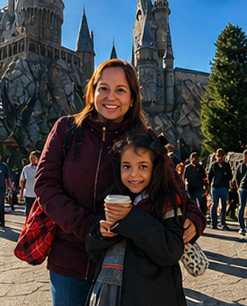
As an education professional specializing in literacy, reading promotion and teacher training, I’ve seen over the years that books have an extraordinary power: they can change the way children learn, think, feel and connect with the world. Through my work leading education initiatives at Fundación ProEd and supporting teachers in innovation and teaching improvement, I’ve seen how reading opens doors to new knowledge, cultures and points of view. But it’s in my most important role, as a mother, that I’ve seen up close the real magic that happens when a child discovers the joy of reading.
Since my daughter was little, we’ve kept a family tradition that became one of our favorite moments of the day: reading together before bed. Before she could read, I was the one who brought the stories to life with my voice. Over time, once she started reading, our routine grew into a beautiful exchange. We take turns reading chapters, meeting characters, imagining settings and talking about the stories we find in books.
This experience confirmed something I’ve always defended in my work: reading isn’t just an academic skill. Reading is a door to creativity, empathy, critical thinking and understanding the world. One of the stars of our reading journey has been J.K. Rowling’s Harry Potter series. It was a huge joy for me when she became curious about this magical universe, because it was a series that also shaped my own story as a reader during my teenage years. We began this adventure in first grade with the first book and set a special rule: first we’d read the book, and then we’d watch the movie.
What we discovered together was wonderful. Before seeing each movie, my daughter had already created the characters, the settings and the details of the story in her mind. When she finally watched the film version, she wasn’t just a viewer. She was a reader who could analyze and compare. She began to spot differences between the book and the movie, notice scenes that had been changed or left out, analyze the filmmakers’ choices and understand that each format tells a story in its own way.
Those conversations took us far beyond the plot. We talked about creativity, film, storytelling choices, values, characters and how the same story can be read from different points of view. What started as a reading routine became a complete learning experience. Today, from first grade to fourth grade, we’ve moved forward book by book, and the excitement is still the same. Each new story brings deeper conversations that match her growth.
As the books move forward and the themes get more complex, our conversations about the characters’ choices, the challenges they face and the lessons we can take from their experiences grow too. A very special part of this journey has been reading the illustrated Harry Potter editions in English. We chose to read them in their original language because I believe literature is one of the most powerful tools for learning a second language. Reading in English doesn’t just help with vocabulary and comprehension. It also lets children build confidence, familiarity and a more natural relationship with the language.
English stops being just a school subject and becomes a tool to explore stories, connect with other cultures and broaden their view of the world. That’s why I was so excited to learn that this year’s Howard Academy English Week theme is inspired by Harry Potter. This celebration is a wonderful chance to experience the language through imagination, creativity and cultural connection. Learning a language goes far beyond memorizing words. A language is a bridge that lets us communicate, understand other realities and become global citizens.
I’d like to take this opportunity to invite families and educators to keep nurturing a love of reading. We know there are important readings in the school curriculum, but the world of books is huge and full of possibilities. When we let children find stories that connect with their interests, we raise more motivated, curious and engaged readers.
At school, we can create simple but meaningful spaces: book clubs, literature circles or even daily moments when a teacher reads a chapter of a book to the class.
Age doesn’t matter. Hearing a story read by a meaningful adult still has a huge impact on language development, imagination and a child’s bond with reading.
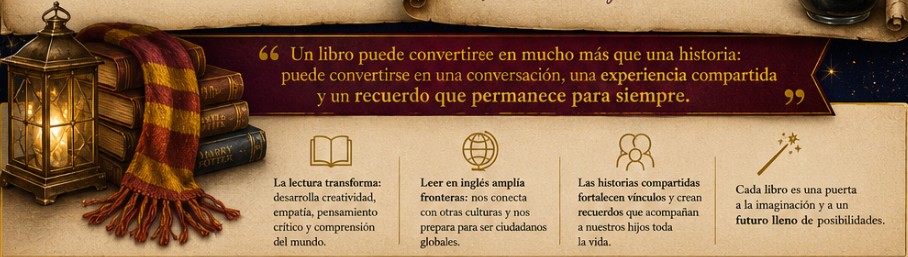
As a mother and educator, I’ve seen that a book can become much more than a story. It can become a conversation, a shared experience and a memory that lasts forever. Thank you, Howard Academy, for being a place where our students can learn, discover and enjoy the process of learning. May this English Week remind us that, just like in the best magical stories, true power lies in the tools we use to change the world: in this case, words. Let’s enjoy the magic of reading.